Media Summary: Abstract: Finding an algorithm that efficiently determines if two codes are equivalent is an open problem in coding theory. MIT 6.046J Design and Analysis of Algorithms, Spring 2015 View the complete course: Instructor: ... Talk at crypto 2011. Authors: Daniele Micciancio, Petros Mol. See

A Search To Decision Reduction - Detailed Analysis & Overview

Abstract: Finding an algorithm that efficiently determines if two codes are equivalent is an open problem in coding theory. MIT 6.046J Design and Analysis of Algorithms, Spring 2015 View the complete course: Instructor: ... Talk at crypto 2011. Authors: Daniele Micciancio, Petros Mol. See This video is part of an online course, Intro to Theoretical Computer Science. Check out the course here: ... Hackerdashery Inspired by the Complexity Zoo wiki: For more advanced ... You're literally one click away from a better setup — grab it now! As an Amazon Associate I earn ...

Photo Gallery

A Search to Decision Reduction for Code Equivalence
Undecidable Problems: Reducibility (Part 1) | What are Reductions?
16. Complexity: P, NP, NP-completeness, Reductions
QIP 2022 | Quantum search-to-decision reductions and the state synthesis problem (Chinmay Nirkhe)
Pseudorandom Knapsacks and the Sample Complexity of LWE Search-to-Decision Reductions
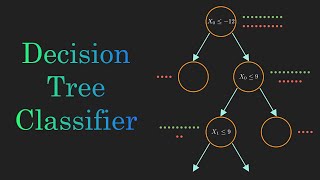
Decision and Classification Trees, Clearly Explained!!!
AO Star Search Algorithm | AND OR Graph | Problem Reduction in Artificial Intelligence Mahesh Huddar
Reducing SAT To Clique - Intro to Theoretical Computer Science
Decision Tree Classification Clearly Explained!
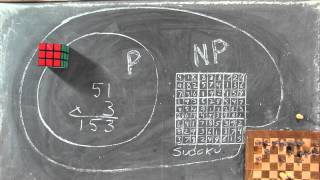
P vs. NP and the Computational Complexity Zoo
Dichotomous Search
Optimization problem vs decision problem - reduction (2 Solutions!!)
View Detailed Profile
A Search to Decision Reduction for Code Equivalence

A Search to Decision Reduction for Code Equivalence

Abstract: Finding an algorithm that efficiently determines if two codes are equivalent is an open problem in coding theory.

Undecidable Problems: Reducibility (Part 1) | What are Reductions?

Undecidable Problems: Reducibility (Part 1) | What are Reductions?

A

16. Complexity: P, NP, NP-completeness, Reductions

16. Complexity: P, NP, NP-completeness, Reductions

MIT 6.046J Design and Analysis of Algorithms, Spring 2015 View the complete course: http://ocw.mit.edu/6-046JS15 Instructor: ...

QIP 2022 | Quantum search-to-decision reductions and the state synthesis problem (Chinmay Nirkhe)

QIP 2022 | Quantum search-to-decision reductions and the state synthesis problem (Chinmay Nirkhe)

Title: Quantum

Pseudorandom Knapsacks and the Sample Complexity of LWE Search-to-Decision Reductions

Pseudorandom Knapsacks and the Sample Complexity of LWE Search-to-Decision Reductions

Talk at crypto 2011. Authors: Daniele Micciancio, Petros Mol. See http://www.iacr.org/cryptodb/data/paper.php?pubkey=23590.

Decision and Classification Trees, Clearly Explained!!!

Decision and Classification Trees, Clearly Explained!!!

Decision

AO Star Search Algorithm | AND OR Graph | Problem Reduction in Artificial Intelligence Mahesh Huddar

AO Star Search Algorithm | AND OR Graph | Problem Reduction in Artificial Intelligence Mahesh Huddar

AO Star

Reducing SAT To Clique - Intro to Theoretical Computer Science

Reducing SAT To Clique - Intro to Theoretical Computer Science

This video is part of an online course, Intro to Theoretical Computer Science. Check out the course here: ...

Decision Tree Classification Clearly Explained!

Decision Tree Classification Clearly Explained!

Here, I've explained

P vs. NP and the Computational Complexity Zoo

P vs. NP and the Computational Complexity Zoo

Hackerdashery #2 Inspired by the Complexity Zoo wiki: https://complexityzoo.uwaterloo.ca/Complexity_Zoo For more advanced ...

Dichotomous Search

Dichotomous Search

Dichotomous

Optimization problem vs decision problem - reduction (2 Solutions!!)

Optimization problem vs decision problem - reduction (2 Solutions!!)

https://amzn.to/4aLHbLD You're literally one click away from a better setup — grab it now! As an Amazon Associate I earn ...

What is a polynomial-time reduction? (NP-Hard + NP-complete)

What is a polynomial-time reduction? (NP-Hard + NP-complete)

Here we introduce a "polynomial-time