Media Summary: Starvation and deadlock are two common bugs that can occur in concurrent programming. Starvation happens when one one or ... Priority inversion is a nasty concurrency bug that occurs when a low priority thread prevents a high priority thread from running. นางสาวพรรณธิพร เพียชิน ECP3R 63332210316-7.

Introduction To Rtos Part 10 - Detailed Analysis & Overview

Starvation and deadlock are two common bugs that can occur in concurrent programming. Starvation happens when one one or ... Priority inversion is a nasty concurrency bug that occurs when a low priority thread prevents a high priority thread from running. นางสาวพรรณธิพร เพียชิน ECP3R 63332210316-7. A queue is a first-in, first-out (FIFO) system that is used to store and pass information between tasks in an A mutex, short for MUTual EXclusion, is a locking mechanism that is used to prevent other threads from interrupting or overwriting ... Memory management is important in a multi-threaded environment, as threads (or tasks) can quickly consume all of the allocated ...

Hardware interrupts are important in many embedded systems. They allow us to respond to external events (such as a button ... In embedded systems, timers offer the ability to delay a call to a function, periodically call a function, or control some peripheral ... Learn how to use CMSIS_OS based on FreeRTOS operating system in your application Intention of this training is to

Photo Gallery

Introduction to RTOS Part 10 - Deadlock and Starvation | Digi-Key Electronics
Introduction to RTOS Part 11 - Priority Inversion | Digi-Key Electronics
Introduction to RTOS Part 10 Deadlock and Starvation
Introduction to RTOS Part 1 - What is a Real-Time Operating System (RTOS)? | Digi-Key Electronics
Introduction to RTOS Part 12 - Multicore Systems | Digi-Key Electronics
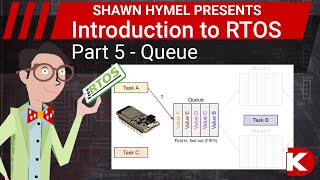
Introduction to RTOS Part 5 - Queue | Digi-Key Electronics
Introduction to RTOS Part 6 - Mutex | Digi-Key Electronics
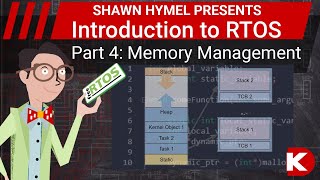
Introduction to RTOS Part 4 - Memory Management | Digi-Key Electronics
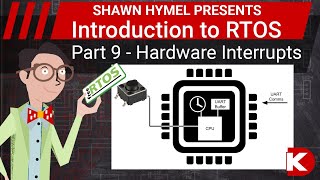
Introduction to RTOS Part 9 - Hardware Interrupts | Digi-Key Electronics
Introduction to RTOS Part 3 - Task Scheduling | Digi-Key Electronics
Embedded systems RTOS Lecture
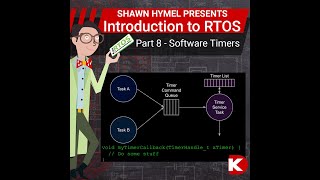
Introduction to RTOS Part 8 - Software Timer | Digi-Key Electronics
View Detailed Profile
Introduction to RTOS Part 10 - Deadlock and Starvation | Digi-Key Electronics

Introduction to RTOS Part 10 - Deadlock and Starvation | Digi-Key Electronics

Starvation and deadlock are two common bugs that can occur in concurrent programming. Starvation happens when one one or ...

Introduction to RTOS Part 11 - Priority Inversion | Digi-Key Electronics

Introduction to RTOS Part 11 - Priority Inversion | Digi-Key Electronics

Priority inversion is a nasty concurrency bug that occurs when a low priority thread prevents a high priority thread from running.

Introduction to RTOS Part 10 Deadlock and Starvation

Introduction to RTOS Part 10 Deadlock and Starvation

นางสาวพรรณธิพร เพียชิน ECP3R 63332210316-7.

Introduction to RTOS Part 1 - What is a Real-Time Operating System (RTOS)? | Digi-Key Electronics

Introduction to RTOS Part 1 - What is a Real-Time Operating System (RTOS)? | Digi-Key Electronics

A real-time operating system (

Introduction to RTOS Part 12 - Multicore Systems | Digi-Key Electronics

Introduction to RTOS Part 12 - Multicore Systems | Digi-Key Electronics

Running tasks in an

Introduction to RTOS Part 5 - Queue | Digi-Key Electronics

Introduction to RTOS Part 5 - Queue | Digi-Key Electronics

A queue is a first-in, first-out (FIFO) system that is used to store and pass information between tasks in an

Introduction to RTOS Part 6 - Mutex | Digi-Key Electronics

Introduction to RTOS Part 6 - Mutex | Digi-Key Electronics

A mutex, short for MUTual EXclusion, is a locking mechanism that is used to prevent other threads from interrupting or overwriting ...

Introduction to RTOS Part 4 - Memory Management | Digi-Key Electronics

Introduction to RTOS Part 4 - Memory Management | Digi-Key Electronics

Memory management is important in a multi-threaded environment, as threads (or tasks) can quickly consume all of the allocated ...

Introduction to RTOS Part 9 - Hardware Interrupts | Digi-Key Electronics

Introduction to RTOS Part 9 - Hardware Interrupts | Digi-Key Electronics

Hardware interrupts are important in many embedded systems. They allow us to respond to external events (such as a button ...

Introduction to RTOS Part 3 - Task Scheduling | Digi-Key Electronics

Introduction to RTOS Part 3 - Task Scheduling | Digi-Key Electronics

The

Embedded systems RTOS Lecture

Embedded systems RTOS Lecture

Now what is an operating system well per

Introduction to RTOS Part 8 - Software Timer | Digi-Key Electronics

Introduction to RTOS Part 8 - Software Timer | Digi-Key Electronics

In embedded systems, timers offer the ability to delay a call to a function, periodically call a function, or control some peripheral ...

FreeRTOS on STM32 - 10 Memory allocation

FreeRTOS on STM32 - 10 Memory allocation

Learn how to use CMSIS_OS based on FreeRTOS operating system in your application Intention of this training is to